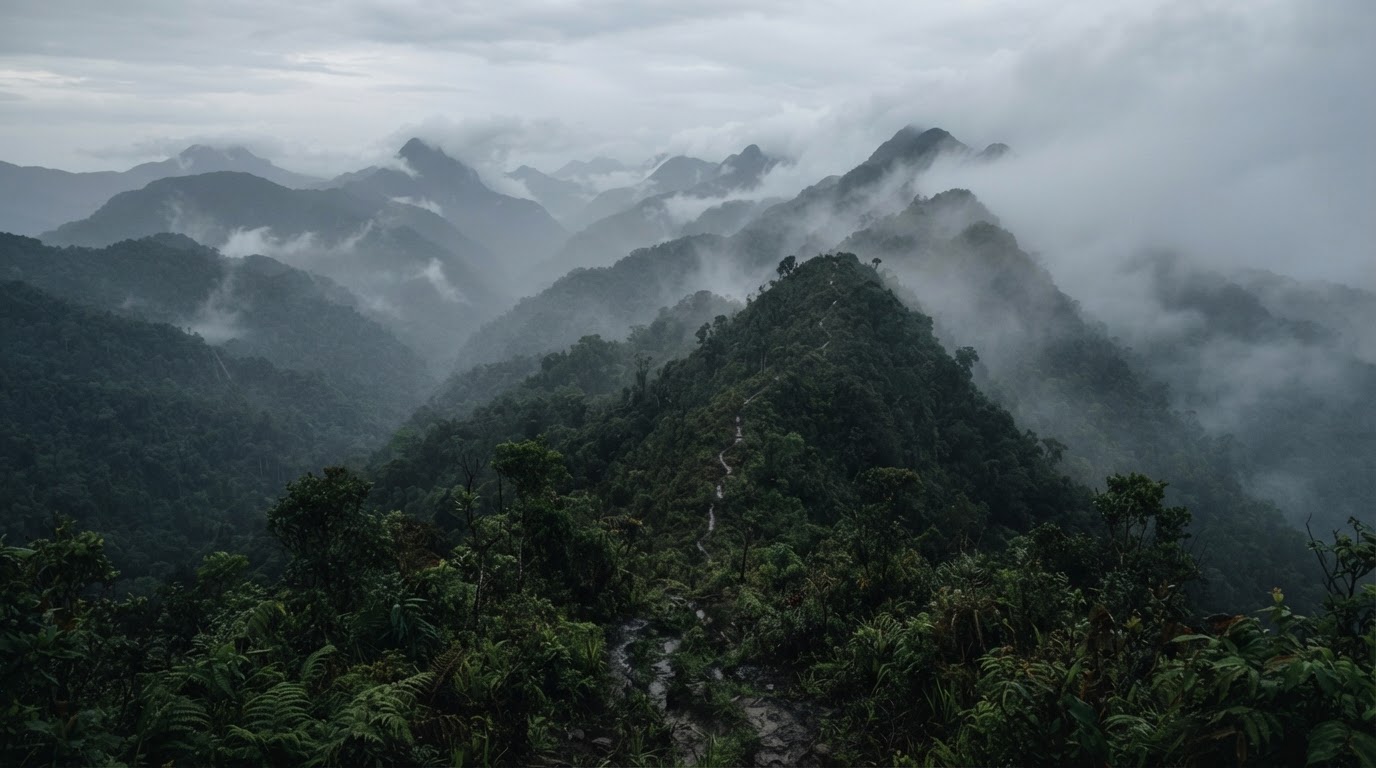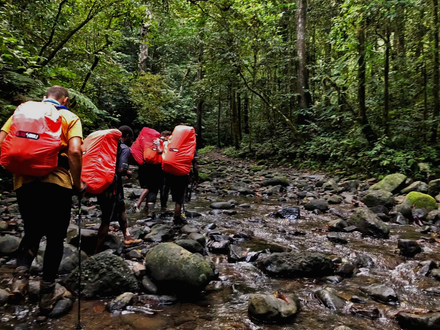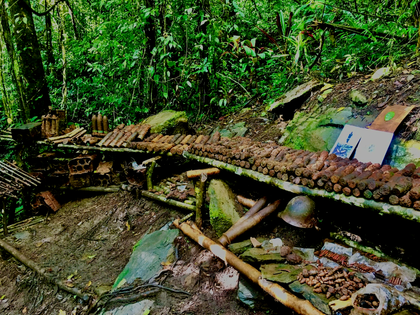
Few places in Australia's military memory carry the weight of the Kokoda Track. Cut across the spine of Papua New Guinea's Owen Stanley Range, the 96-kilometre footpad is not a single battlefield but a corridor of them — a series of desperate actions fought in mud, cloud and near-impossible terrain between July and November 1942. To walk it today is to move through that story step by step.
The road to Papua
After Pearl Harbor, Japan swept south. Rabaul fell in January 1942, giving Japan a forward base in the Australian mandate territory of New Guinea. The next objective was Port Moresby — the last Allied bastion between the Japanese advance and the Australian mainland.
When an attempt to take it by sea was turned back at the Battle of the Coral Sea in May, and shattered again at Midway in June, Japan chose the overland route: land forces on the north coast at Gona, Buna and Sanananda, then drive south across the Owen Stanleys to seize Port Moresby from the landward side.
The first stand — the Militia
The force sent to hold the Track was, at first, not the celebrated veterans of the Middle East but Australian Militia — part-time soldiers of the 39th Battalion, many barely trained and some still in their teens. Ordered into the jungle in mid-1942, they reached Kokoda — the small plateau village that gave the Track its name — and held it against the advancing Japanese.
Outnumbered and supplied only by what could be carried on men's backs, they fought, fell back, re-formed, and fought again. Theirs is the quietly astonishing story of a handful of young men who bought Australia time.
Theirs is the quietly astonishing story of a handful of young men who bought Australia time.
Isurava and the fighting withdrawal
By August the Japanese were pressing hard. The 39th was reinforced by battle-hardened AIF battalions — the 2/14th, 2/16th and later the 2/27th — recalled from North Africa and rushed to New Guinea. At Isurava, in late August, the Australians made their defining stand.
Surrounded and fighting at close quarters, Private Bruce Kingsbury won a posthumous Victoria Cross charging through the Japanese line. The position could not be held, but the stand cost the Japanese the momentum they never fully regained — and began the long fighting withdrawal south toward Port Moresby, through Deniki, Eora Creek, Alola, Brigade Hill and Mission Ridge.
The high-water mark — Ioribaiwa
By mid-September the Australians had been pushed back to Ioribaiwa Ridge — within sight, some say, of the lights of Port Moresby. The Japanese were spent. Their supply line was a single foot track through the mountains; disease, starvation and the Australians' stubborn rearguard actions had hollowed them out.
At Milne Bay, on the eastern tip of the peninsula, an Australian force had already inflicted Japan's first land defeat of the war. Facing the impossible task of supplying a forward battle across the range, the Japanese were ordered to withdraw.
The counter-offensive and the beachheads
The Australians pursued them back the way they had come — over the same ridges and rivers, re-crossing ground that had cost so many lives only weeks earlier. By November the Japanese had been pushed off the Owen Stanleys.
The fighting continued at the beachheads of Gona, Buna and Sanananda, where the Japanese held out in prepared positions until early 1943. Australian and American forces closed the campaign at heavy cost — one of the most costly, and decisive, chapters of the Pacific war.
The Fuzzy Wuzzy Angels
No account of Kokoda is complete without the Papua New Guineans who carried it. The carriers — affectionately known as the Fuzzy Wuzzy Angels — ferried supplies up the range and brought the wounded down, often on stretchers fashioned from saplings.
Their care for the injured, across language and culture, became one of the campaign's most enduring legacies. The people whose villages sit along the Track today are the descendants of those carriers — and their welcome is part of what makes walking Kokoda unlike anything else.
Walking it today
The campaign saved Port Moresby and, with it, Australia's strategic position in the Pacific. But its real weight is personal — carried in the men who fought it and the people who supported them.
To walk the Kokoda Track now is to read that history in the ground: the ridges they climbed, the creeks they drank from, the villages they died near. It is not a museum behind glass. It is a living Track — and it is waiting.
Get the full Kokoda Training & Packing Guide
The 12-week training plan, full packing list, and what to expect on the 96km Track — from our 20-year guides, straight to your inbox.
Australian Chaperone & Track Historian
Darcy — Chaperone
Darcy has walked the Kokoda Track for more than a decade as an Australian Chaperone. He has spent years studying the 1942 campaign and the families along the Track — and shares that history with every trekker he guides.